
Gas Prices in California Are Up: Is a Home EV Charger Worth It in Santa Cruz?
Key Takeaways
Home EV charging offers more convenience by letting homeowners charge overnight and start each day with a ready-to-drive vehicle.
Level 2 chargers are the best fit for most homes because they charge much faster than a standard outlet and are better suited for daily use.
A home EV charger can help reduce transportation costs compared with relying on high California gas prices, especially when paired with off-peak utility rates.
Solar + EV charging creates even more long-term value by helping homeowners use clean energy and reduce dependence on the grid.
For homeowners throughout Santa Cruz, Scotts Valley, Soquel, Aptos, Watsonville and surrounding counties, the question is no longer whether electric vehicles are convenient. The real question is whether charging at home makes more sense than continuing to rely on rising fuel prices and inconsistent public charging access.
Right now, that question feels especially relevant. As of March 23, 2026, AAA lists California’s average regular gas price at $5.79 per gallon, while the Santa Cruz-Watsonville average is about $5.70 per gallon. When gas stays elevated, the value of home charging becomes much easier to see for drivers who want more control over their daily transportation costs.
Related: California Average Gas Prices
Why This Matters More in Santa Cruz Right Now
Drivers often balance commuting, errands, school drop-offs, and weekend travel across the county and beyond. When fuel prices climb, even routine driving starts to feel more expensive. A home EV charger gives you a different kind of setup. Instead of planning around gas stations or waiting at public chargers, you charge where your day begins and ends.
That convenience matters, but so does predictability. A professionally installed home charger gives you a more reliable way to manage everyday driving without constantly watching fuel prices or wondering whether a public charging station will be available when you need it.
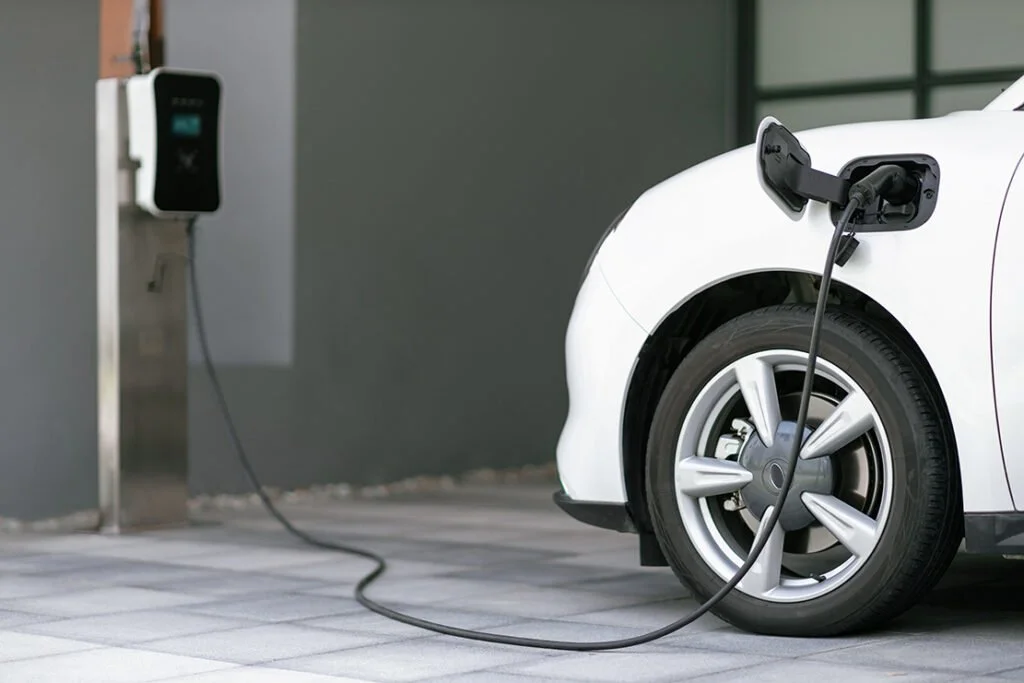
level-2-ev-charging
Is a Home EV Charger Actually Worth It?
For many homeowners in Santa Cruz, yes. The value usually comes down to four practical benefits: convenience, faster charging, potential long-term savings, and the ability to pair charging with solar.
1. You Can Charge at Home Instead of Depending on Public Stations
One of the biggest advantages of residential EV charging is simplicity. You plug in at night and wake up to a charged vehicle in the morning. That can be a major improvement over relying on public charging stations, especially during busy times or when charging locations are out of your way.
For households with a consistent driving routine, home charging can make EV ownership much easier to manage day to day.
2. A Level 2 Charger is Much More Practical for Daily Use
For most homeowners, a Level 2 EV charger is the best fit. Santa Cruz County notes that Level 2 charging systems require a 240-volt electrical circuit, and installation requires an electrical permit through ePlan Review. That is one reason professional installation matters. It helps make sure the charger is installed safely, sized properly, and brought up to code.
Level 2 charging is far more practical than plugging into a standard wall outlet. It is designed for everyday residential charging and is typically the right solution for homeowners who want overnight charging speed that supports normal daily driving.
How Home Charging can Help with Costs
The exact savings depend on your vehicle, mileage, utility rate, and charging habits, but home charging often gives drivers more control than relying on gasoline. PG&E says its EV charging plans are designed to help meet charging needs while keeping fuel costs lower than gasoline or diesel alternatives. PG&E also states that residential customers can choose from EV-focused options like EV2-A and EV-B, depending on how they want their home and vehicle charging set up.
That matters because a home charging setup does more than add convenience. It gives homeowners the opportunity to shift charging to lower-cost hours and build a more efficient routine around their utility plan.
Off-Peak Charging can Improve the Value Even More
According to PG&E, the EV2-A rate plan is intended for customers who can shift charging to off-peak hours, including 12 a.m. to 3 p.m. For homeowners who charge overnight or during lower-demand times, that may help lower overall charging costs.
If your goal is to reduce the stress of high fuel prices, this kind of rate structure can make a home charger even more worthwhile.
Solar Panels + EV Charging is Where the Value Gets Even Stronger
For homeowners already considering solar panels, or who already have panels installed, pairing solar with EV charging can create even more long-term value. Instead of relying entirely on grid electricity or paying for gas, you can use solar production to support more of your charging needs at home.
That approach can help with:
reducing dependence on fluctuating utility and fuel costs
making daily driving more energy efficient
creating a more self-sufficient home energy system
getting more value from your solar investment
For a company like Sandbar Solar & Electric, this is where residential EV charging becomes more than a standalone upgrade. It becomes part of a broader home energy strategy.
What Homeowners Should Consider Before Installing Home EV Charging Station
Not every home is exactly the same, so the right EV charging setup depends on the property and the driver. Before installation, it helps to consider:
Electrical Panel Capacity
Some homes may already have the capacity needed for a Level 2 charger, while others may need upgrades or load calculations before installation.
Driving Habits
A homeowner with a short daily commute may have different charging needs than someone who drives longer distances throughout Santa Cruz County or into surrounding areas.
Vehicle Type
Different EVs have different charging capabilities, connector needs, and usage patterns.
Future Energy Goals
If you are planning to add solar, battery storage, or another EV later, it makes sense to think ahead when designing your home charging solution.
Are There Incentives Available for Home EV Charger Installation?
Possibly. The IRS says homeowners who install qualified EV charging equipment may be eligible for the Alternative Fuel Vehicle Refueling Property Tax Credit, provided the property is installed in a qualifying location. Because tax-credit eligibility can depend on the specific property and tax situation, it is smart to verify details with a tax professional before making assumptions.
Even when incentives are not the main reason for installing a charger, they may help reduce upfront costs and improve the overall value of the project.
If you’re a California homeowner age 18+ within our service area, enter our bike giveaway today, no purchase necessary, by filling out our survey here.
Ready to Install a Home EV Charger in Santa Cruz?
Sandbar Solar & Electric provides residential EV charging solutions in Santa Cruz, California designed around safety, performance, and long-term convenience. Whether you want a standalone Level 2 EV charger or a system that works alongside rooftop solar, the right setup can help you charge faster, drive smarter, and reduce your dependence on rising fuel costs.
FAQs
1. How much faster is a Level 2 home EV charger than a standard outlet?
A Level 2 charger is significantly faster than a standard 120-volt wall outlet because it uses a 240-volt connection designed for EV charging. For most homeowners, that means more practical overnight charging and less waiting between drives.
2. Do I need a permit to install a home EV charger in Santa Cruz?
Yes, in most cases, a Level 2 EV charger installation in Santa Cruz County requires an electrical permit. Working with a licensed professional helps ensure the charger is installed safely and in compliance with local code requirements.
3. Is it cheaper to charge an EV at home than to buy gas?
For many drivers, charging at home can be more cost-effective than buying gasoline, especially when gas prices are high and charging is done during off-peak utility hours. Actual savings depend on your EV, mileage, and electric rate plan.
4. Can I pair my home EV charger with solar panels?
Yes. Pairing a home EV charger with solar is one of the best ways to improve long-term energy savings and reduce reliance on the grid. It can also help make your driving routine more sustainable by using renewable energy produced at home.