
ORPHANED SOLAR: WHY YOUR INSTALLER NEEDS TO BE AROUND AS LONG AS YOUR PANELS
A solar system is built to last 25 years or more. The company that installed it should last that long too. Across California and the rest of the country, a lot of homeowners are finding out that isn’t always the case.
What is an orphaned solar system?
An orphaned system is one whose installer has gone out of business. The panels are still on the roof, but there’s no one to call when an inverter fails, the monitoring app goes dark, or a warranty claim needs to be filed.
Over the last few years, changes to California’s net metering rules, the end of the federal residential solar tax credit, and rising costs have pushed many solar companies to close their doors.

* Orphaned Solar System * a residential or commercial solar setup whose original installer or contractor has gone out of business, declared bankruptcy, or stopped servicing your area
Solar companies that have shut down or filed for bankruptcy
More than 100 US solar companies have filed for bankruptcy or shut down since 2023. Here are some of the biggest names, national and here in California.
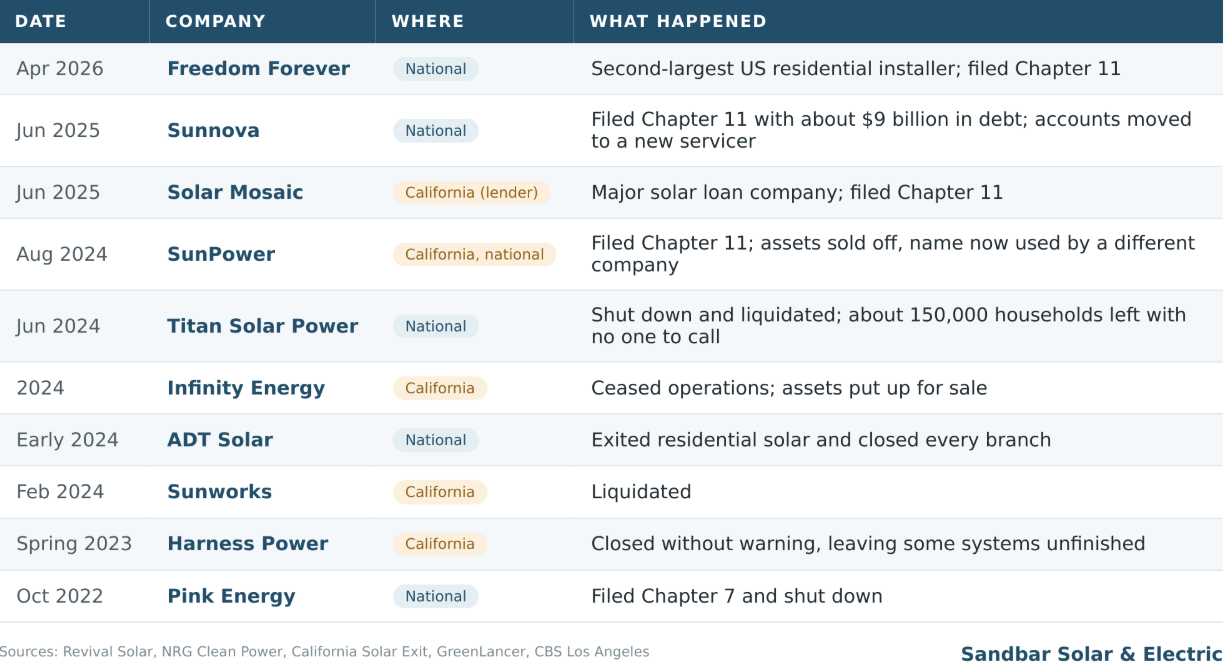
Table of 10 solar companies that shut down or filed for bankruptcy between 2022 and 2026, including Freedom Forever, Sunnova, SunPower, Titan Solar Power, ADT Solar, and Pink Energy, leaving many homeowners with orphaned solar systems.
Sources: Revival Solar, NRG Clean Power, California Solar Exit, GreenLancer, CBS Los Angeles
10 problems orphaned system owners face
No one to call for repairs. Most solar companies won’t work on another installer’s system, or will charge a premium to take it on.
Lost workmanship warranty. The installer’s labor warranty disappears with the company, so roof leaks or wiring issues from the install become your cost.
Hard-to-claim manufacturer warranties. Panel and inverter warranties may still exist, but manufacturers often require a certified installer to file the claim, and labor usually isn’t covered.
Inverter failures. Inverters often wear out years before panels do, and replacement models may be discontinued.
Monitoring goes dark. If the equipment’s monitoring app or account shuts down, you can’t tell whether your system is producing, and a failure can go unnoticed for months.
Roof work complications. Reroofing means removing and reinstalling the panels. This becomes more challenging and expensive if your original installer is out of business.
Lease or PPA confusion. If you leased your system or have a power purchase agreement, it may be unclear who owns the contract, who maintains the system, who to call for help, and who to pay.
Trouble selling your home. Buyers, appraisers, and lenders ask about warranties, service history, and lease terms (and clearing the UCC-1 fixture filing). These details can delay closing or lower its value.
Missing paperwork. Permits, drawings, warranty documents, and utility records can be hard to track down.
Upgrade headaches. Adding a battery or expanding the system means checking compatibility with older equipment and updating utility agreements, which is harder without the original records.
Why it keeps happening
Many companies chased volume by pricing jobs as low as they possibly could. That can work while incentives are strong. When the market shifts, there’s no cushion, and the business disappears along with the warranties and service it promised.
How Sandbar has lasted 20+ years
Sandbar Solar & Electric has served the Central Coast for more than 20 years, and that isn’t luck. We price every project to be competitive today and sustainable for the long run, because we plan to be here for another 20 years.
A company that intends to stay in business prices accordingly. That approach lets us pay our team a livable wage, keep experienced electricians and installers on staff, and still pick up the phone when you call five, ten, or twenty years from now.
When you compare solar quotes, the lowest number isn’t the whole story. Ask how long the company has been around, and whether it will be there when your system needs service. Cheap labor isn't skilled, and skilled labor isn't cheap.
You’re welcome to stop by our headquarters for a tour of our facility and meet the team in person.
Left without an installer?
If the company that installed your system is no longer in business, we may be able to help. While we don't service systems that we didn't install, we can help advise on your options. If your PV system is older than 15 years, you've likely recouped your original investment and then some, and it's worth considering replacing it with newer, more power-dense equipment, rather than spending money on fixing equipment that is nearing its end of life.
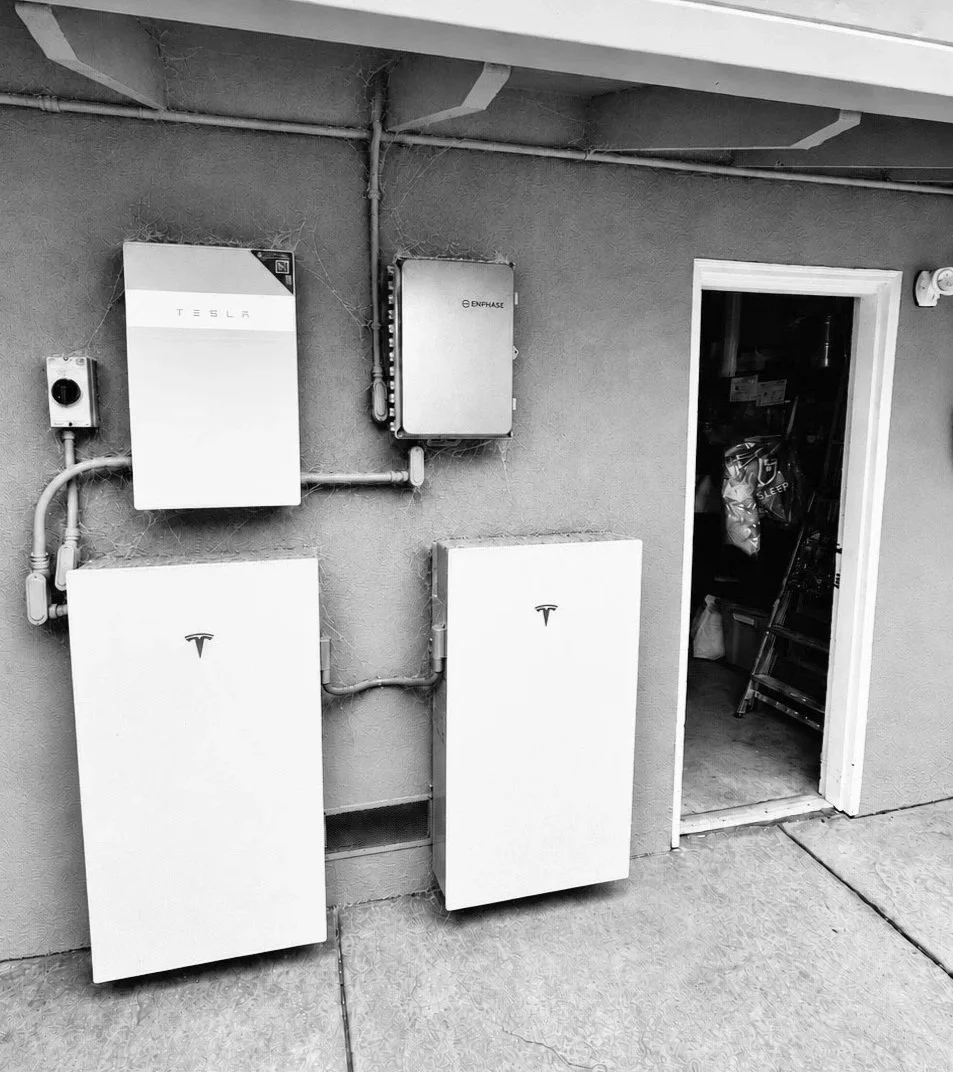
Solar isn’t the only thing that can be orphaned, your batteries & inverters can be left collecting cobwebs.
Frequently asked questions
What happens to my solar panels if my installer goes out of business?
Your panels keep working, but you lose your workmanship warranty and your go-to contact for repairs, monitoring, and warranty claims.
Is my solar warranty still valid if the company went bankrupt?
Manufacturer warranties on panels and inverters usually survive, but the installer’s labor warranty typically does not. You may need a certified installer to file claims for you.
Who can repair my solar system if the original installer closed?
Look for an established and experienced local solar and electrical contractor that services systems it didn’t install.
Do I still have to pay my solar loan or lease if the company went bankrupt?
Usually, yes. Loans and leases are often held by a separate lender or sold to a new servicer, so check your statements to see who services your account now.
How do I choose a solar company that will still be around in 20 years?
Ask how long they’ve been in business, whether they use their own employees or subcontractors, and who handles service after installation. The adage, "You get what you pay for" certainly applies to solar & battery installations. The lowest bid is usually not the best choice for long-term value.
Can I add a battery to an orphaned solar system?
Often yes, but the installer needs to check compatibility with your existing equipment and update your utility agreement.