
Solar Panel Cleaning: How Often Should You Really Do It?
Key Takeaways
Regular solar panel cleaning helps maintain energy output by removing dirt, salt residue, and debris that block sunlight and reduce efficiency.
Most homeowners should clean solar panels once or twice per year, with coastal and high-dust areas often needing more frequent service.
Professional solar panel cleaning protects your investment by safely removing buildup without damaging surfaces, wiring, or warranties.
Solar panels are designed to be low maintenance, but that does not mean they are maintenance-free. Over time, dirt, dust, pollen, bird droppings, and coastal salt can reduce how much sunlight reaches your panels. When that happens, your system produces less energy, and your savings take a hit.
Here on California’s Central Coast, solar panel cleaning plays a bigger role than many homeowners realize. This guide explains how often solar panels should really be cleaned, what affects cleaning frequency, and how proper maintenance protects your investment.
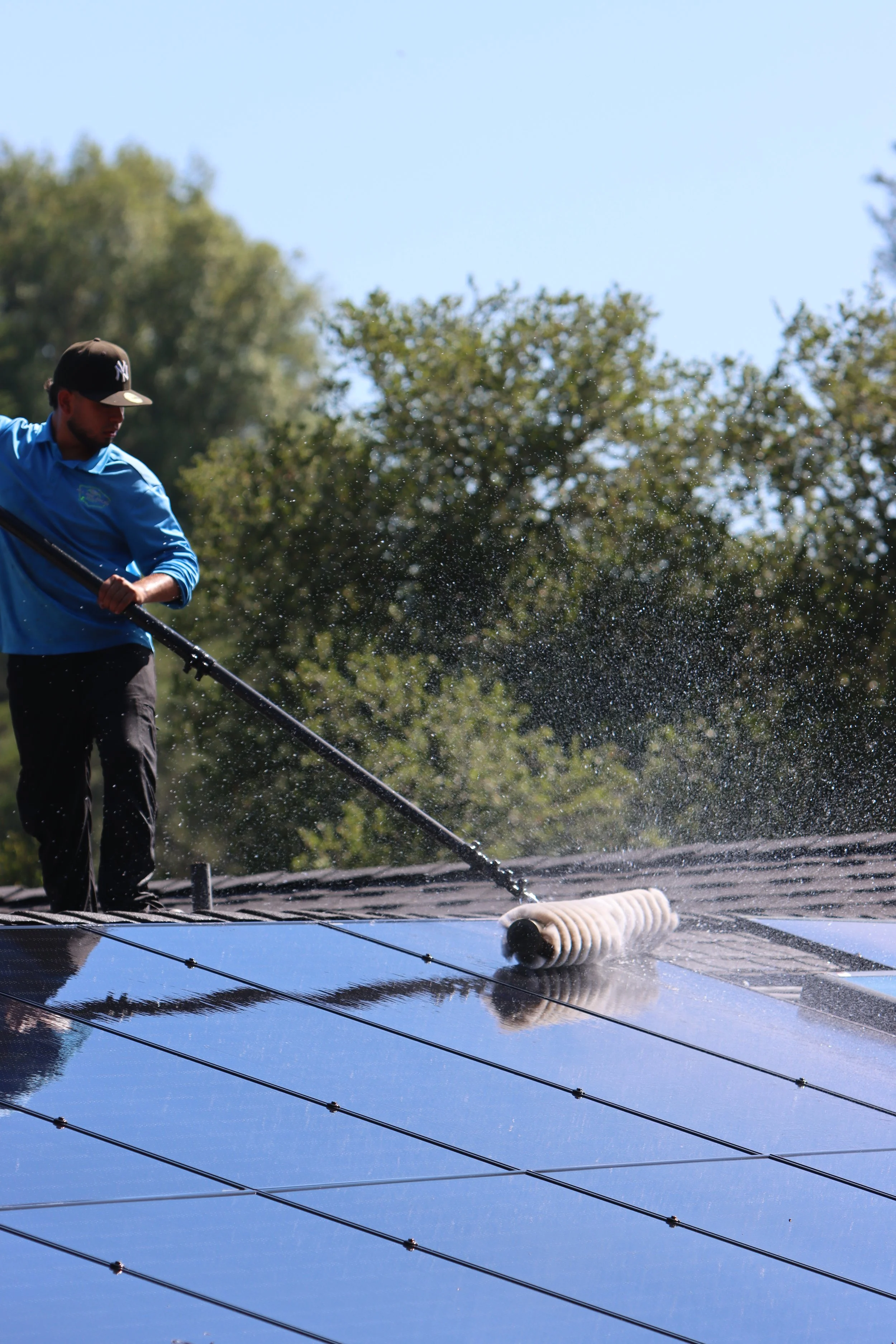
Our partners at All One Solar Shine are masters at cleaning both residential and commercial scale systems.
Why Solar Panel Cleaning Matters
Solar panels work by absorbing sunlight. When debris builds up on the surface, it blocks light and reduces efficiency. Even a thin layer of dirt can cause noticeable energy loss over time.
In coastal areas like Santa Cruz and Monterey Counties, salt air, fog residue, and airborne particles can accumulate faster than in inland regions. Add seasonal pollen, wildfire ash, and bird activity, and panels can lose efficiency without obvious signs from the ground.
Keeping your panels clean helps:
Maintain consistent energy production
Protect long-term system performance
Maximize your return on investment
Extend the life of your solar panels
How Solar Panels Lose Efficiency Over Time
Solar performance loss often happens slowly, making it easy to overlook. Several environmental and seasonal factors contribute to declining output:
Coastal salt and fog residue: Leaves a thin film that reduces light transmission
Pollen and dust: Builds up seasonally, especially in spring and summer
Wildfire ash: Fine particles can cling to panels and block sunlight
Bird droppings and tree debris: Cause localized shading that disproportionately reduces output
Because these issues develop gradually, homeowners may not notice reduced production until the losses become significant.
What Happens If You Don’t Clean Your Solar Panels?
Neglecting solar panel cleaning can lead to more than just short-term efficiency loss. Over time, the consequences may include:
Reduced energy production and lower monthly savings
Decreased return on investment across the system’s lifespan
Potential long-term surface or seal damage from baked-on residue
Warranty complications if maintenance recommendations are ignored
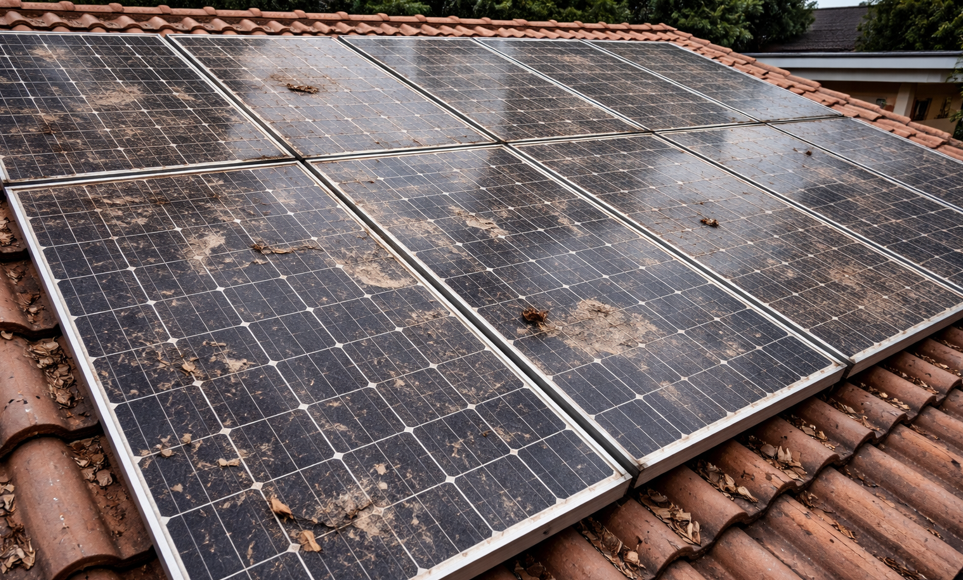
Here’s an examples of rooftop panels that haven’t had any love in a long time.
Routine cleaning is a simple step that helps avoid unnecessary performance and financial losses.
How Often Should You Clean Solar Panels in California?
For most homeowners, solar panel cleaning is recommended once or twice per year. However, your ideal schedule depends on your environment.
Coastal homes (Santa Cruz, Monterey, Santa Clara, Alameda, San Benito, San Mateo): Every 6 months due to salt spray and fog residue
Inland or suburban homes: Once per year is usually sufficient
High-dust or wildfire-prone areas: More frequent cleaning may be needed
Homes near trees or birds: Spot cleaning between full services
If your energy production has dropped and weather conditions have remained consistent, dirty panels may be the cause.
Can Rain Clean Solar Panels?
While rain can rinse away loose dust, it does not fully clean solar panels. Rainwater often leaves behind mineral residue and does not remove sticky contaminants like bird droppings, pollen, or salt buildup.
In dry climates or during long periods without rain, grime accumulates quickly. Relying on rain alone can lead to gradual efficiency loss that adds up over time.
Signs Your Solar Panels Need Cleaning
Homeowners often assume their system is working fine because panels still look mostly clean from the ground. However, performance data usually tells a different story.
Common signs that solar panel cleaning is needed include:
A noticeable drop in energy production
Visible dirt, bird droppings, or residue on panels
Long dry periods without rain
Panels located near trees, roads, or the ocean
Monitoring your system’s output is one of the easiest ways to tell when cleaning is overdue.
Is It Safe to Clean Solar Panels Yourself?
While it may be tempting to clean solar panels on your own, DIY cleaning can be risky. Walking on roofs increases the chance of injury, and using the wrong tools or cleaning solutions can damage panel surfaces or void warranties.
Professional solar panel cleaning uses:
Purified water and soft-bristle tools
Safe, non-abrasive techniques
Trained technicians who avoid disturbing electrical components
This ensures your panels are cleaned thoroughly and safely, without compromising performance or protection.
How Professional Solar Panel Cleaning Protects Your Investment
Professional solar panel cleaning goes beyond rinsing panels with water. Trained technicians understand how to safely remove buildup without scratching glass, damaging seals, or affecting wiring.
Routine professional cleaning helps:
Maintain peak efficiency
Maximize energy production
Improve long-term savings
Extend the lifespan of your solar system
Over the lifespan of a solar system, consistent solar maintenance can make a measurable difference in overall performance.
Why Work With a Local Solar Expert
Local experience matters when it comes to solar maintenance. Environmental conditions along the California Central Coast are different from other regions, and cleaning schedules should reflect that.
Sandbar Solar & Electric has served Santa Cruz County and surrounding areas for more than 19 years. With thousands of residential and commercial installations, our team understands how coastal conditions impact system performance and how proper solar panel cleaning protects your system year after year.
Contact Sandbar Solar for Solar Panel Services in Monterey and Santa Cruz, CA
Solar panel cleaning is a simple but powerful way to keep your system running at its best. By keeping your panels clean, you can maintain energy output, protect your investment, and avoid unnecessary efficiency loss.
Sandbar Solar & Electric offers expert solar services backed by decades of local experience. If you want to make sure your solar system is operating at peak performance, professional solar panel cleaning is a smart place to start.
Contact Sandbar Solar & Electric today to schedule a solar system evaluation and keep your panels producing at peak performance.
Frequently Asked Questions About Solar Panel Cleaning
1. How much energy can dirty solar panels lose?
Dirty solar panels can lose anywhere from 5% to 25% of their efficiency, depending on buildup and environmental conditions. Coastal residue and bird droppings can cause even greater losses if left untreated.
2. Is solar panel cleaning required to keep my warranty valid?
Some manufacturers recommend regular cleaning as part of system maintenance. While not always required, neglecting maintenance can lead to performance issues that may not be covered under warranty.
3. What time of year is best for solar panel cleaning?
Spring and late summer are ideal times for solar panel cleaning in California. Spring removes winter debris and pollen, while late summer clears dust and buildup after long dry periods.
4. How long does professional solar panel cleaning take?
Most residential solar panel cleaning appointments take one to two hours, depending on system size and roof access. The process is quick and does not interrupt your home’s power supply.
5. Does solar panel cleaning improve ROI?
Yes. By restoring lost efficiency and maintaining consistent output, regular cleaning helps maximize long-term savings and overall return on investment.