
How Coastal Fog, Salt Air, and Weather Affect Solar Panels
Key Takeaways
Coastal fog can temporarily reduce solar production, especially during morning hours, but panels can still generate energy through diffused sunlight.
Salt air and ocean moisture can contribute to buildup and corrosion risk, making proper installation materials and routine solar panel maintenance important.
Weather changes throughout Santa Cruz and Monterey County can affect daily output, but annual solar performance can still remain strong with the right system design.
Regular solar panel maintenance helps protect long-term efficiency, especially for homes and businesses near the coast.
Coastal fog can temporarily reduce solar production, while salt air and marine moisture can contribute to buildup and corrosion risk over time. However, with proper installation, monitoring, and routine solar panel maintenance, coastal solar systems can continue performing well.
Coastal living is one of the best parts of owning a home or business in Santa Cruz and Monterey. The ocean views, cooler temperatures, and mild weather make the Central Coast a beautiful place to live. But if you own solar panels near the coast, the local climate can also affect how your system performs over time.
Fog, salt air, marine moisture, wind, and seasonal weather patterns all play a role in solar panel production and long-term care. The good news is that solar panels are built to handle outdoor conditions, and with the right installation, monitoring, and solar panel maintenance plan, your system can continue producing reliable, clean energy for years.
At Sandbar Solar & Electric, we help homeowners and businesses throughout Santa Cruz, Monterey, and the surrounding Central Coast communities get the most from their solar energy systems.
Why Coastal Weather Matters for Solar Panels
Solar panels are designed to work outdoors in changing weather conditions. They can handle sun, rain, wind, and temperature shifts. However, coastal environments create a few added challenges compared to inland areas.
Homes near the ocean are often exposed to fog, mist, salt air, and moisture. Over time, these conditions can leave residue on panels, affect mounting equipment, and make routine inspections more important. This does not mean solar is a poor choice for coastal properties. It simply means the system should be installed correctly and maintained with the local climate in mind.
How Coastal Fog Affects Solar Panel Performance
Fog is common along the Central Coast, especially during certain times of year. In Santa Cruz and Monterey, mornings can start gray and cool before the marine layer burns off later in the day.
Because solar panels perform best under direct sunlight, fog can reduce production during cloudy or low-light periods. However, panels can still generate power from diffused sunlight. This means your system may produce less energy during foggy mornings, then increase output once the sun breaks through.
For many properties, this daily pattern is already considered during system design. A properly sized solar energy system can account for local weather patterns and seasonal changes.
Coastal Factors That Can Affect Solar Panels
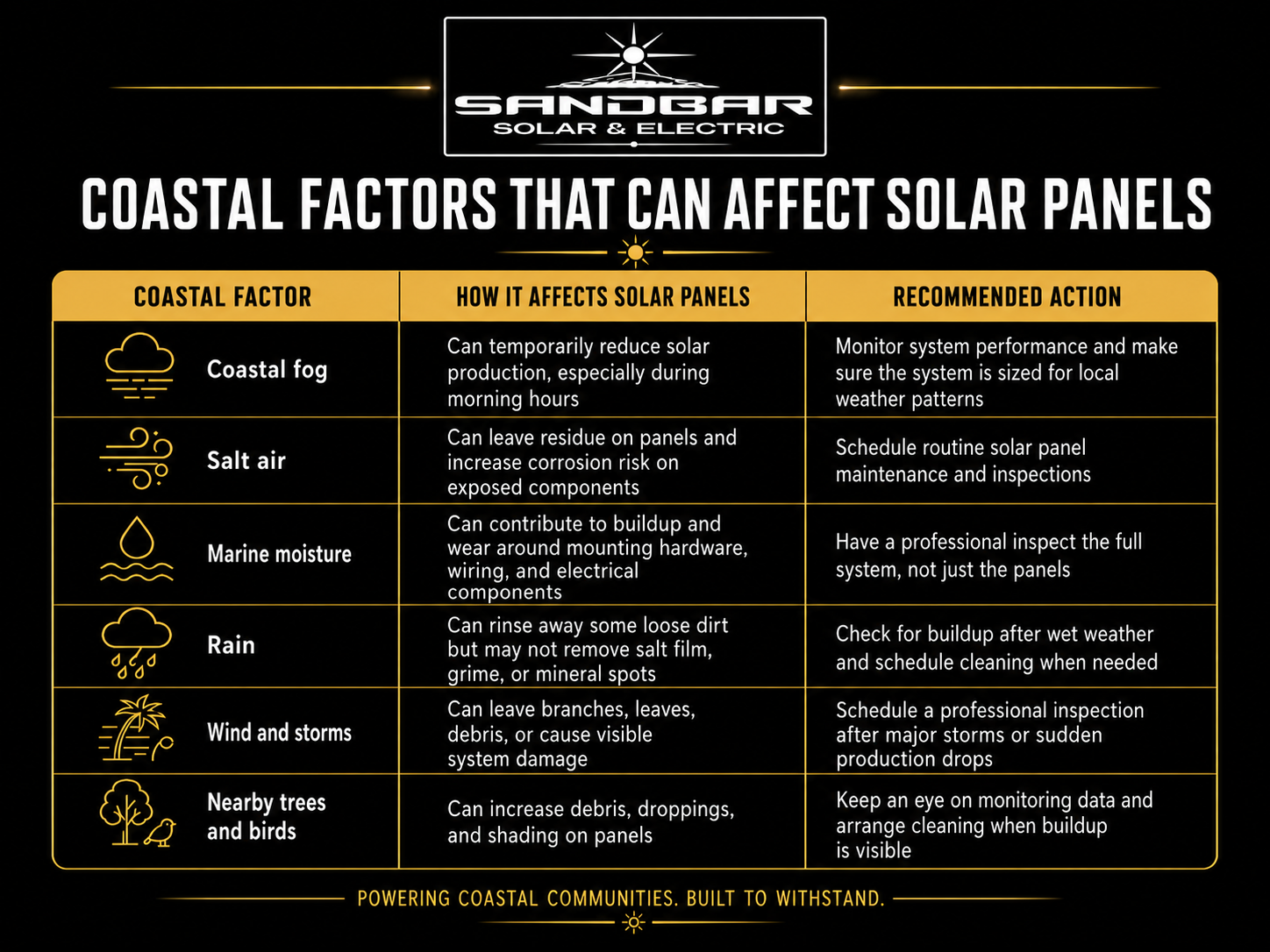
Coastal Factors That Can Affect Solar Panels
How Salt Air and Marine Moisture Affect Solar Panels
Salt air is another important factor for coastal solar systems. When your property is near the ocean, tiny salt particles can travel through the air and settle on exterior surfaces, including solar panels, racking, wiring, and electrical components.
Over time, salt residue may contribute to:
Film or buildup on panel surfaces
Reduced sunlight absorption
Corrosion risk on exposed metal parts
Wear on mounting hardware
Increased need for inspections and cleaning
This is where solar panel maintenance becomes especially important. Regular inspections can help catch early signs of buildup, loose components, or corrosion before they affect system performance.
Can Rain Clean Solar Panels?
Rain can help rinse away some dust, pollen, and light debris. However, it may not remove everything, especially in coastal environments where salt film and grime can cling to the glass.
In some cases, rainwater can leave mineral spots or push debris to the lower edges of the panels. If your panels are installed at a low tilt or located near trees, buildup may be more noticeable.
Professional solar panel maintenance can help determine whether your panels need cleaning, inspection, or performance troubleshooting.
How Wind and Storms Affect Solar Panels
Santa Cruz and Monterey can experience windy conditions, coastal storms, and seasonal rain. Solar panels are built to withstand normal weather exposure, but strong winds and storms can still create issues around the system.
After heavy weather, it is smart to check for:
Fallen branches or leaves on panels
Loose wiring or visible damage
Debris around the roof-mounted equipment
Unusual changes in solar production
Water intrusion around roof penetrations
You should never climb onto your roof to inspect solar panels without proper training and safety equipment. Instead, schedule a professional solar panel maintenance inspection if you notice a sudden drop in production or visible damage from the ground.
Why Solar Panel Maintenance Matters
Solar panel maintenance helps your system stay efficient, safe, and reliable. While solar panels do not require constant upkeep, they do benefit from periodic care, especially in coastal areas.
A maintenance visit may include:
Visual inspection of panels and mounting hardware
Checking for salt buildup, dirt, pollen, and debris
Reviewing system performance data
Inspecting wiring, inverters, and electrical components
Looking for signs of corrosion or weather-related wear
Identifying potential issues before they become larger problems
For coastal properties, maintenance is not just about keeping panels clean. It is about protecting the entire system from the effects of fog, moisture, salt air, and seasonal weather.
For additional guidance on solar PV maintenance and long-term performance, the U.S. Department of Energy explains how proper operations and maintenance can help improve system efficiency, reduce downtime, and extend system lifespan.
How Often Should Coastal Solar Panels Be Maintained?
The ideal maintenance schedule depends on your location, roof design, tree coverage, panel angle, and exposure to salt air. A home close to the ocean may need more frequent inspections than a property farther inland.
As a general rule, many solar systems benefit from an annual inspection. Properties exposed to heavy salt air, frequent debris, birds, or nearby trees may need maintenance more often.
If your monitoring system shows lower-than-expected production, that may also be a sign that your panels need attention.
Signs Your Solar Panels May Need Maintenance
Your solar system may need professional maintenance if you notice:
A sudden drop in energy production
Panels that look hazy, dirty, or streaked
Salt film or grime on the surface
Leaves, branches, or bird droppings on panels
Inverter warnings or monitoring alerts
Visible damage after wind or storms
Higher utility bills despite normal energy usage
Small issues can become larger problems when left unaddressed. Routine solar panel maintenance helps protect your investment and supports better long-term energy production.
Solar Panel Maintenance for Homes and Businesses
Both residential and commercial solar systems can be affected by coastal weather. For businesses, reduced solar production can impact long-term energy savings. For homeowners, poor system performance can lead to higher utility bills and less return from the solar investment.
Sandbar Solar & Electric provides solar expertise for properties throughout Santa Cruz, Monterey, and nearby Central Coast communities. Whether you need system monitoring, maintenance, inspection, or help understanding your solar performance, our team can help.
Protect Your Solar Investment on the Central Coast
Solar panels are a smart investment for many property owners, but coastal conditions make proper care important. Fog, salt air, marine moisture, rain, and wind can all affect how your system performs over time.
With routine solar panel maintenance, you can reduce buildup, catch issues early, and help your solar energy system continue producing clean power year after year.
Contact Sandbar Solar & Electric for Solar Panel Maintenance
If your solar panels are exposed to coastal fog, salt air, or changing Central Coast weather, now is a good time to schedule a maintenance inspection. Sandbar Solar & Electric helps homeowners and businesses in Santa Cruz, Monterey, and nearby areas keep their solar systems performing at their best.
Contact Sandbar Solar & Electric today to schedule solar panel maintenance
FAQs About Coastal Weather and Solar Panel Maintenance
Does fog stop solar panels from working?
No. Fog can reduce solar production, but it does not stop panels from working completely. Solar panels can still generate electricity from diffused sunlight, though output may be lower until the fog clears.
Does salt air damage solar panels?
Salt air does not usually damage panels right away, but long-term exposure can contribute to buildup and corrosion risk on parts of the system. Routine solar panel maintenance can help identify and manage these issues.
How often should I schedule solar panel maintenance near the coast?
Many systems benefit from an annual inspection, but coastal properties in Santa Cruz and Monterey may need more frequent solar panel maintenance depending on salt exposure, tree coverage, and system performance.
Can I clean my solar panels myself?
It is safer to have a professional inspect and clean your solar panels, especially if they are roof-mounted. Professionals can check for buildup, wiring issues, corrosion, and performance concerns while following proper safety practices.
What are signs that my solar panels need maintenance?
Common signs include lower energy production, visible dirt or salt film, inverter alerts, debris on the panels, or higher utility bills. Any sudden performance change should be checked by a solar professional.
Does rain clean solar panels enough?
Rain can rinse off some loose dirt and dust, but it may not remove salt film, bird droppings, pollen, or stuck-on grime. Coastal solar panels may still need professional maintenance even after rainy weather.